
Design in three dimensions · Part one
3D Modeling for Custom Awards and Deal Toys
From inspiration to a finished custom piece
A photograph, a building, a meaningful object, or a work of art can be the starting point for a custom award. Turning that starting point into a physical piece involves a series of design decisions: what to emphasize, how to give it depth, how the parts fit together, and which materials express the idea.
3D modeling makes those decisions visible. Between the initial artwork and the finished piece, a digital model gives the team a way to review shape, proportion, and detail from more than one angle.
Follow the process through three examples below: a sculptural relief, an architectural tower, and a crystal centerpiece set into a textured rock form.
Client names, logos, and transaction details have been removed from the examples shown. Selected artwork and product photographs have been digitally edited for anonymity and square framing.
Four stages, each answering a different question
1. Source inspiration: What should this piece communicate?
The starting point establishes the subject and character of the design. It may be a reference photograph, a sketch, a recognizable structure, or a painting used as source inspiration.
At this stage, the important question is what makes the reference meaningful. A silhouette, a gesture, or a distinctive detail may matter more than reproducing every part of the original.
2. Artwork: How will the idea become an award?
Concept artwork brings the subject into a proposed composition. It shows how the sculptural element relates to its base, background, and any personalization. Material notes help explain the intended appearance.
Artwork is the first view of the complete design. It gives the team something specific to discuss before the dimensional details are resolved.
3. 3D model: How does the shape work in space?
A model screenshot shows the geometry of the piece. Front and angled views reveal depth, spacing, and relationships that can be difficult to judge in a flat presentation.
A model may appear in a single neutral color. That color is a display choice; it does not describe the finished material. The review focuses on the shape: proportions, recognizable details, transitions between surfaces, and how the elements sit together.
4. Physical piece: How do materials and finishes bring it to life?
The physical sample adds information that a screen cannot fully convey: the way light passes through crystal, the texture of a sculpted surface, or the appearance of a metallic finish.
Sample review and production approval are distinct from reviewing a digital model. Depending on the project, the team may refine details along the way before proceeding with the finished order.
Example 1: A historic scene becomes a dimensional relief
The source inspiration
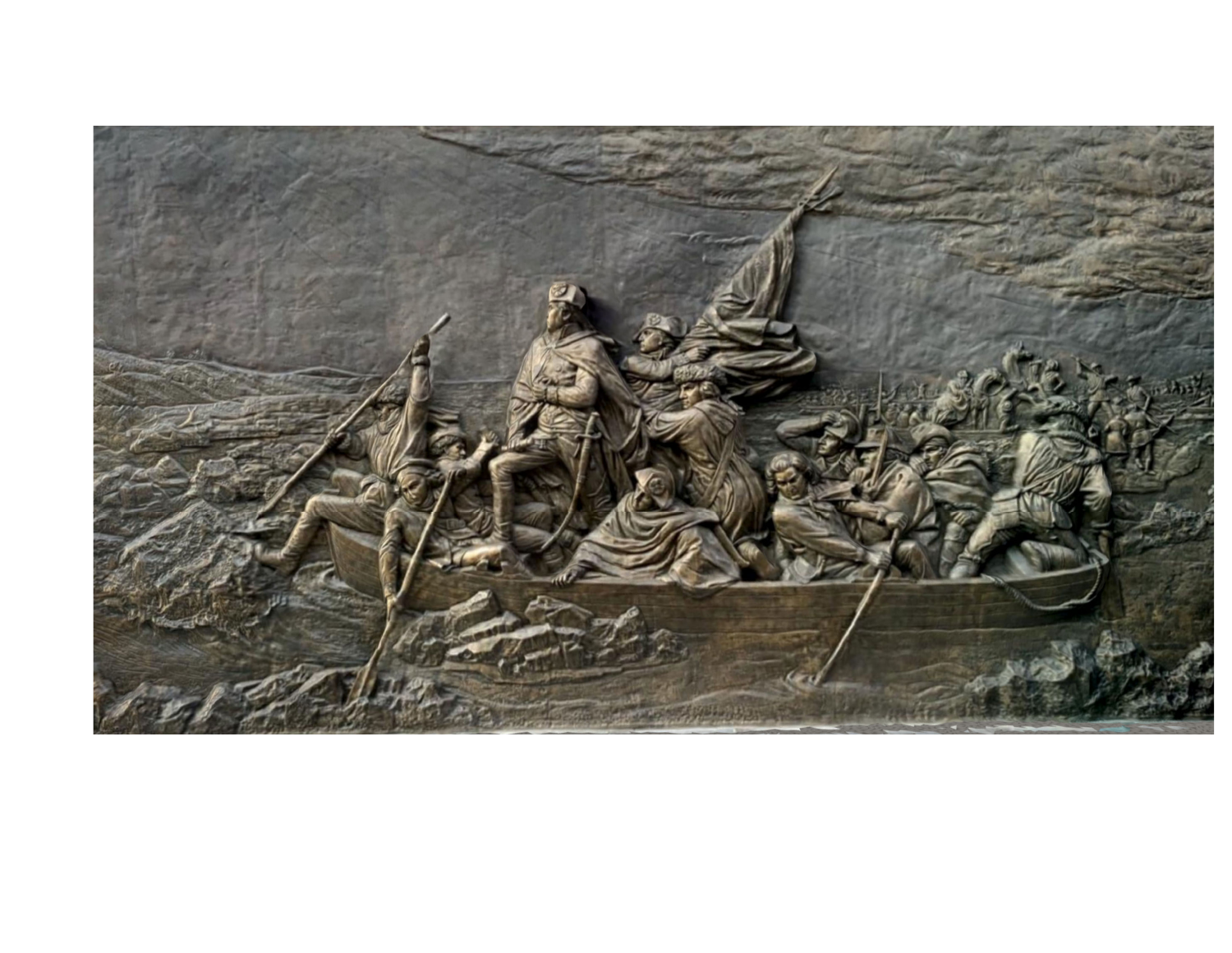
Emanuel Leutze’s Washington Crossing the Delaware provided the source inspiration for this design. A sculptural relief reference helped establish how the scene could be expressed with depth.
Seen together, the painting and relief show how the central figures, boat, and foreground can move from a pictorial scene into a layered dimensional composition.
The artwork
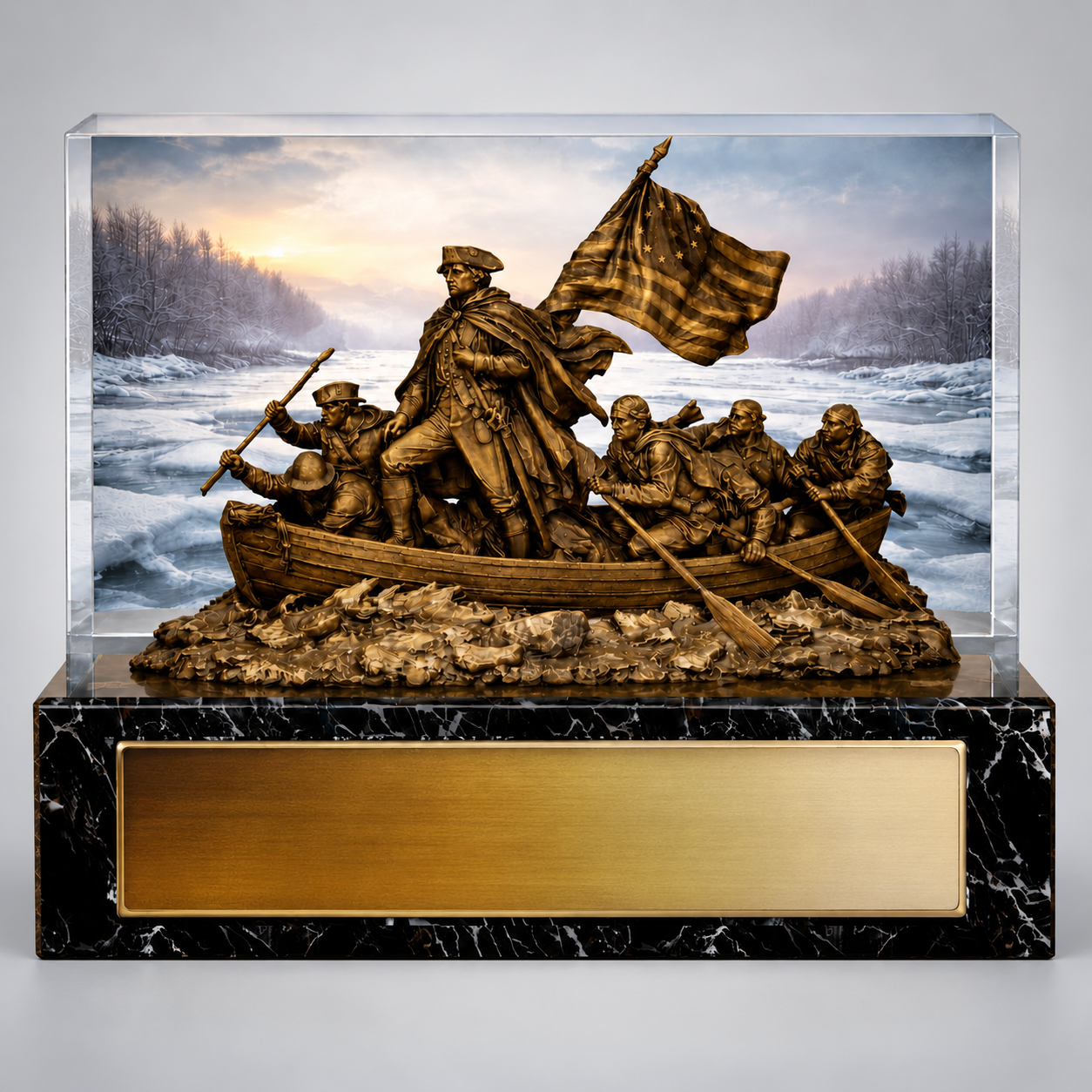
The artwork places the scene on a rectangular base with a background panel and a front plaque. It presents a bronzed effect for the sculptural element and shows the composition as a complete commemorative piece.
The model
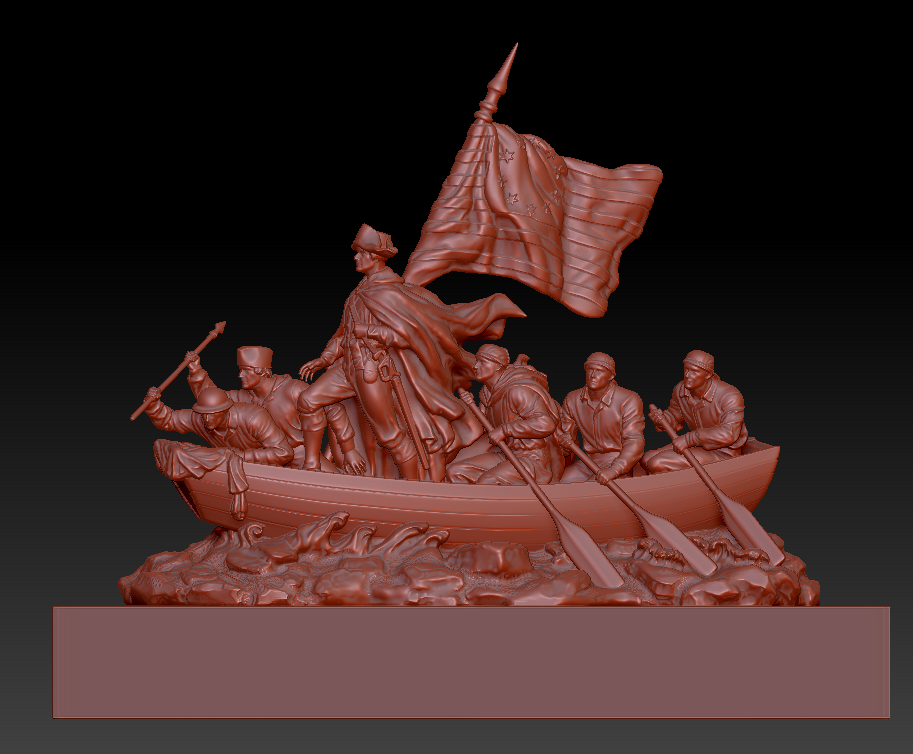
The model isolates the dimensional scene. The arrangement of the figures, the edge of the boat, and the foreground can be reviewed without the distraction of final color or plaque lettering.
This is also where reference fidelity matters. In the project correspondence, questions about headwear and a pole were resolved by explaining the details in the source imagery. The review supported retaining those features.
The finished piece
The physical piece brings together the relief, background panel, base, and gold-toned plaque. The bronzed finish brings out the raised forms and helps unify the sculpted scene.
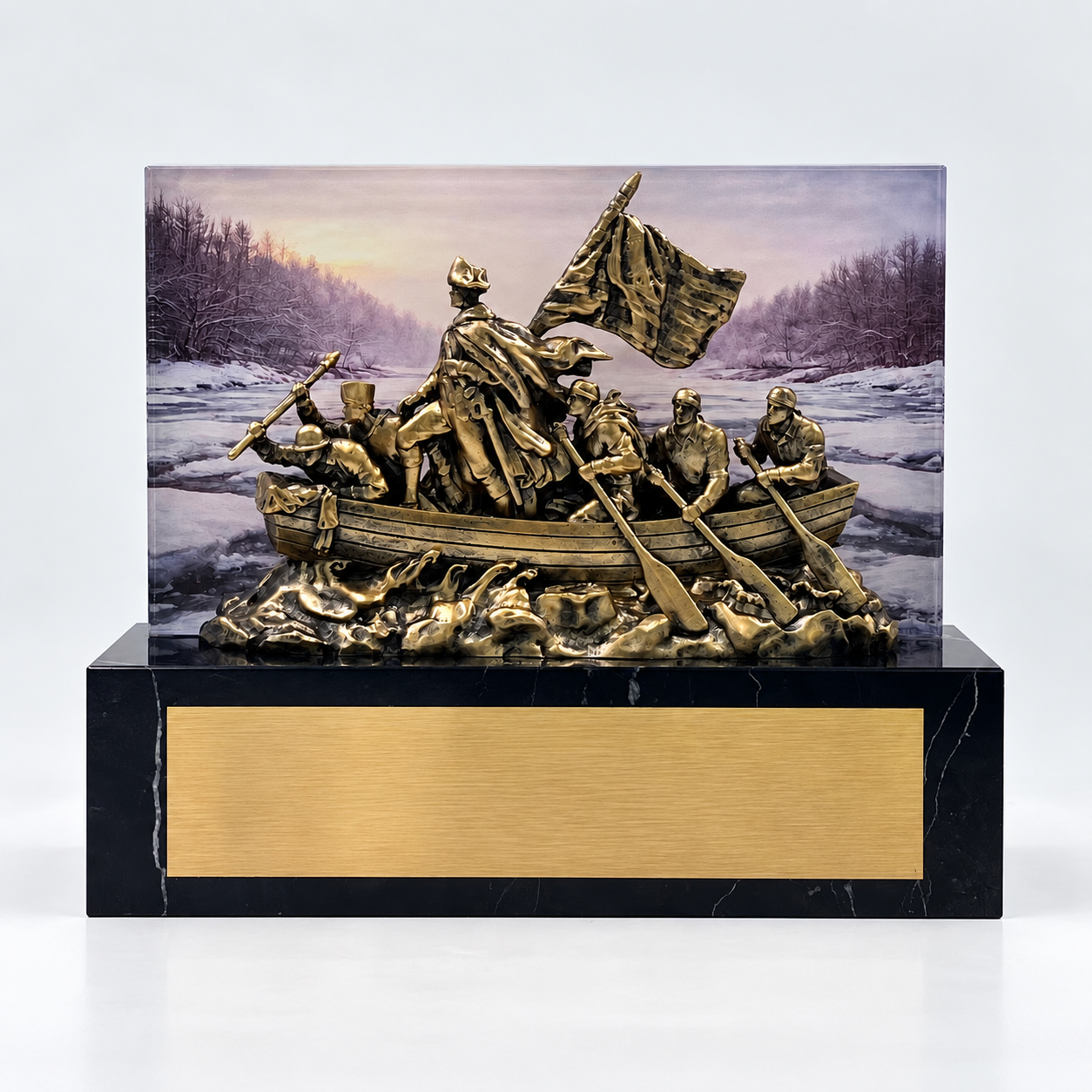
What this example shows: 3D modeling helps preserve the character of a source image while translating overlapping forms into a dimensional composition.
Example 2: Translating a building into a miniature
The design direction
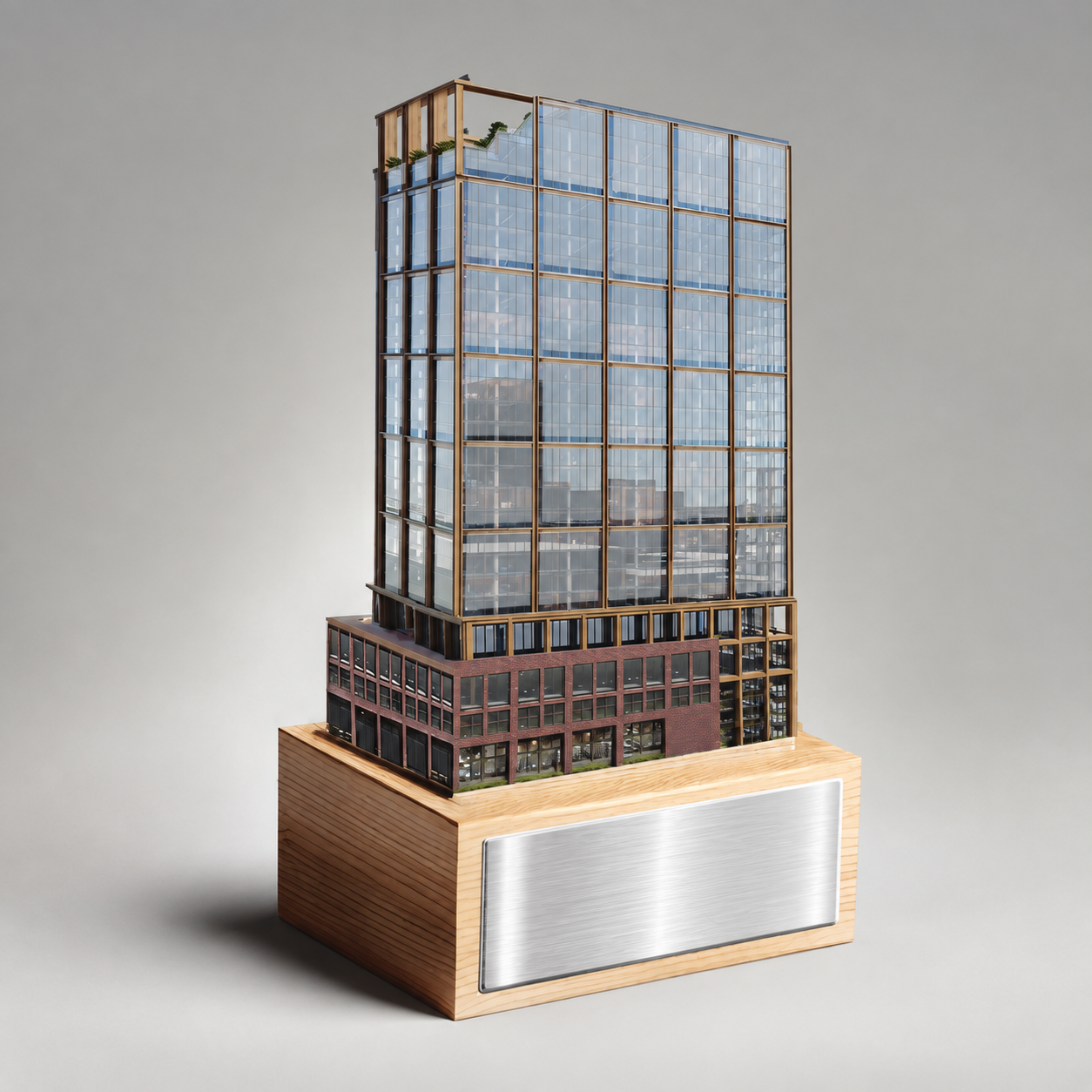
This architectural design starts with a recognizable facade: a tall grid of windows, a stepped roofline, and a contrasting lower section. The artwork brings those features together on a wooden base.
The reference package includes architectural imagery and elevation drawings. They give the design team more information than a single front-facing picture can provide.
The model review
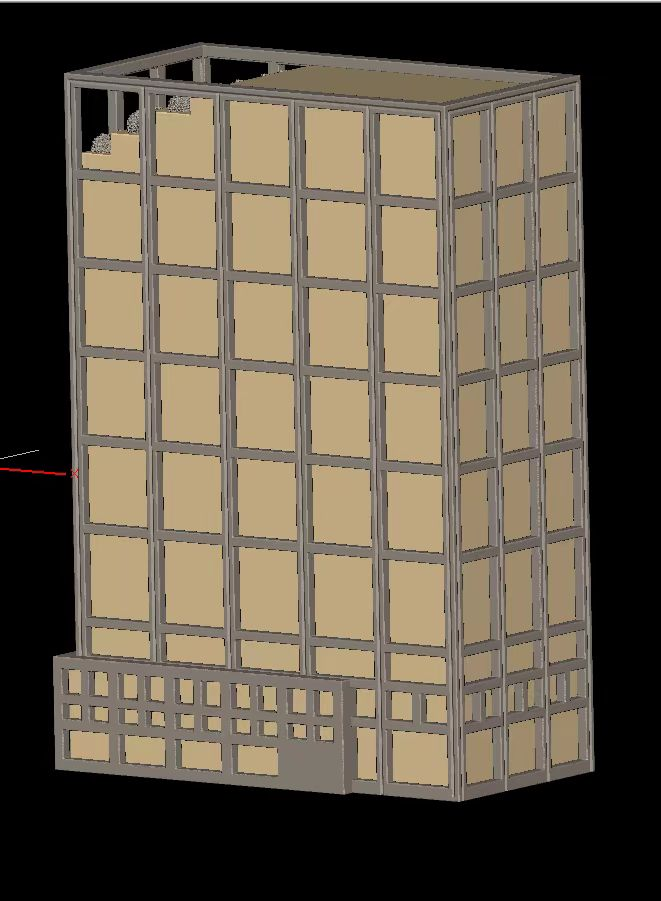
The model screenshot shows the building from an angle, making the front, side, and roofline visible together. The window grid and lower section can be compared with the artwork before the material appearance is finalized.
The model shown here is the corrected project-specific submission that was approved to proceed to a sample.
The finished order
The physical piece gives the facade a blue-and-bronze appearance and mounts the replica on a wooden base. The photograph shows how the regular geometry reads at the scale of a desk piece.
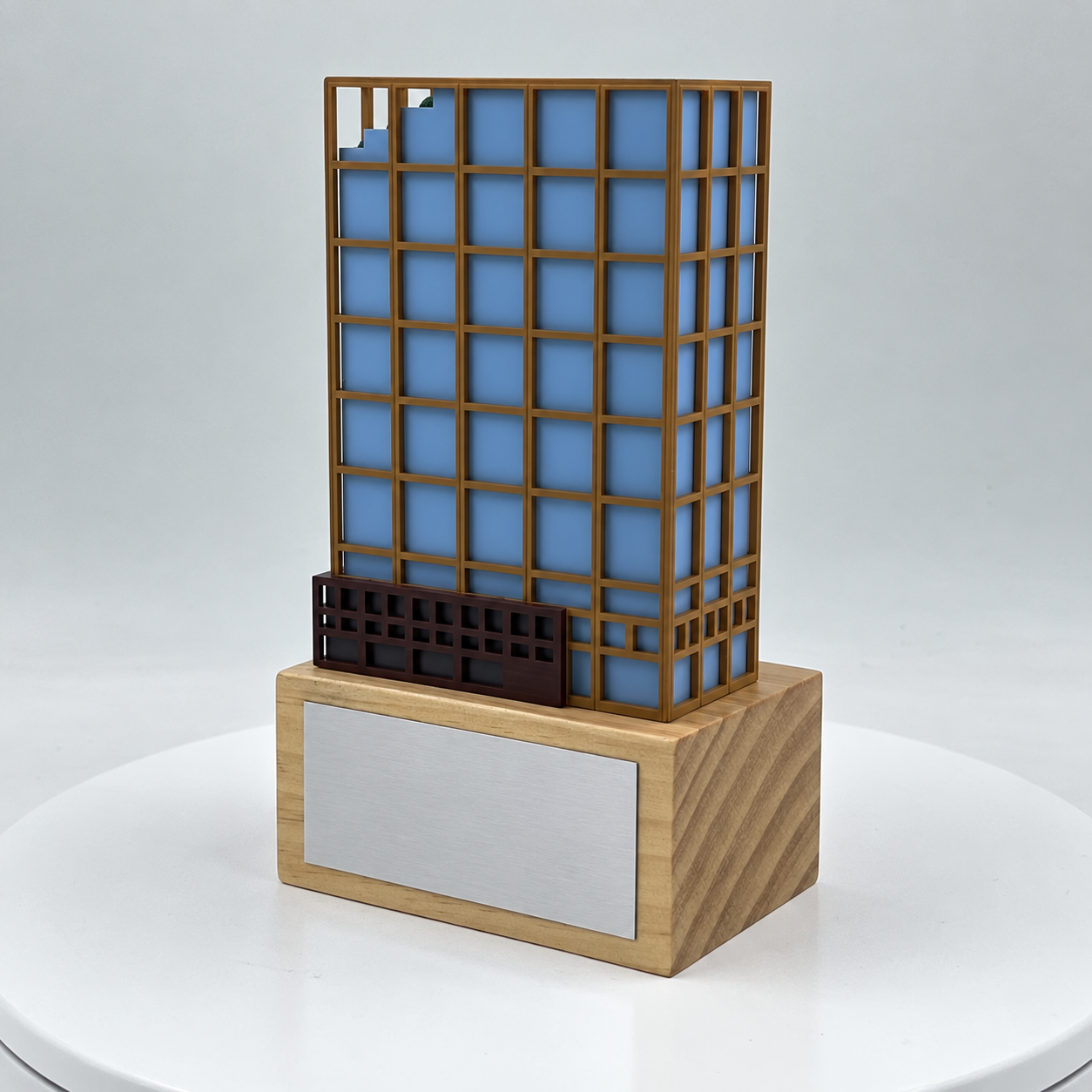
What this example shows: Architectural imagery establishes the character of the building; model views help translate its facade, massing, and roofline into a small dimensional object.
Example 3: A crystal centerpiece meets an organic rock form
The design direction
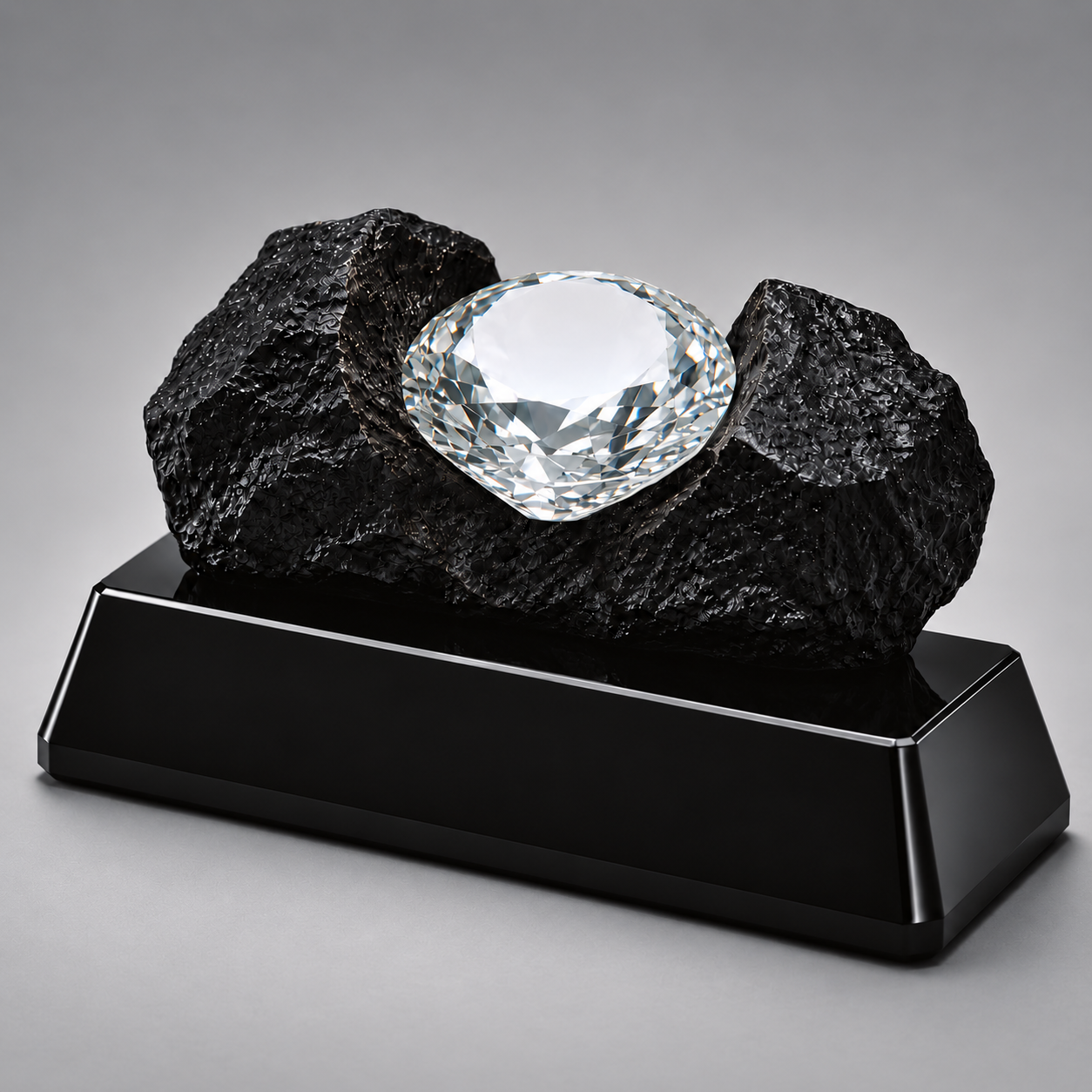
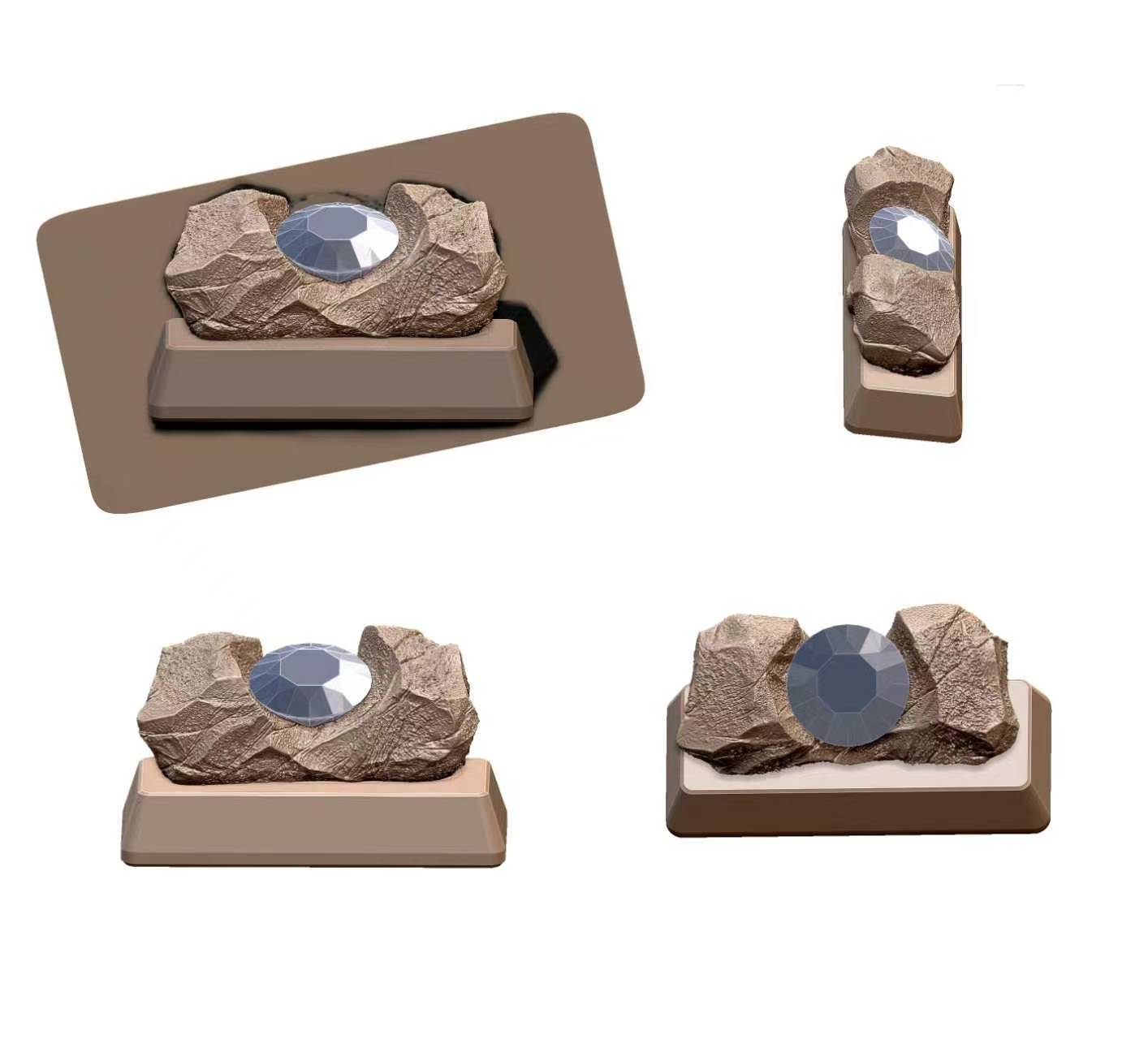
This concept combines two contrasting forms: a clear, faceted crystal centerpiece and an irregular black rock bed. The artwork establishes their relationship and shows how the assembly sits on a black base.
A separate inspiration photograph was not found in the reviewed materials for this example; the documented visual sequence begins with the concept artwork.
The model
The model views show the shape of the rock bed and the position of the centerpiece from several directions. Here, the useful comparison is between the regular facets and the surrounding uneven surface.
The model helps communicate their spatial relationship. It does not, by itself, demonstrate the optical appearance of crystal or the final surface finish.
The physical sample
In the sample photograph, the crystal catches and transmits light while the black resin rock bed provides a textured setting. The polished black base completes the composition.
The correspondence records approval of this sample for additional pieces without changes. The photograph shown here is the sample, rather than a photograph of the full production order.
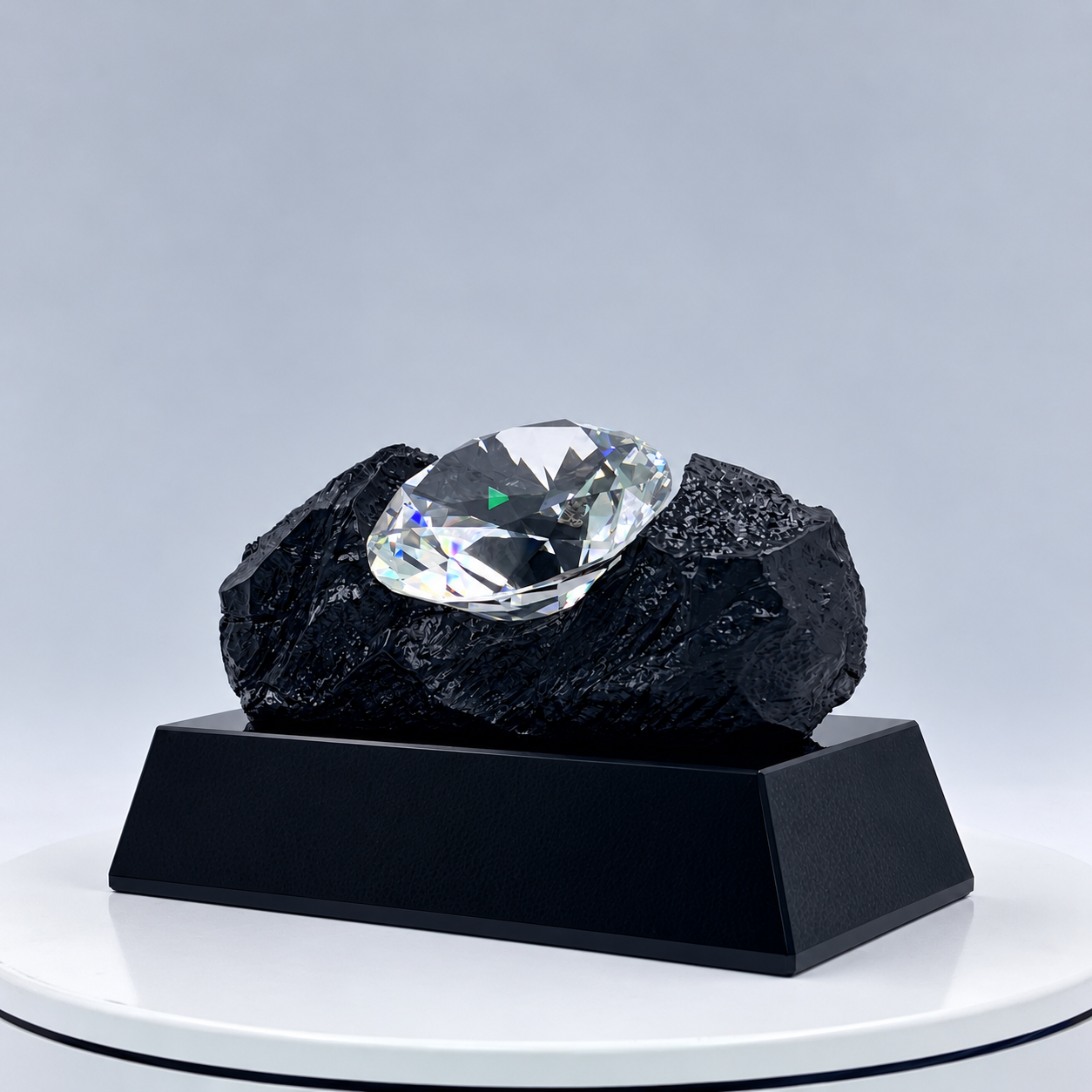
What this example shows: The digital model explains form and placement; the physical sample reveals the contrast between materials.
What to look for when reviewing a 3D model
A useful review starts with the features that matter most to the idea.
- Recognition: Does the silhouette clearly communicate the intended subject?
- Proportion: Do the main elements feel right in relation to one another and to the base?
- Depth: Do the forms read clearly from the front and from an angle?
- Defining details: Are important features, such as a spire or a figure's gesture, included?
- Composition: Does the sculptural element leave appropriate space for the surrounding design and personalization?
Color, texture, and transparency need their own review in the artwork, material specifications, and physical sample. A single-color model screenshot should be read alongside those references.
Questions about the process
Do I need to bring a finished design?
A finished 3D file is not the only starting point. The examples here begin with reference material or concept artwork. Sharing the subject, the occasion, the intended quantity, and the desired delivery date gives the design discussion a useful foundation.
Is a 3D model the same as a rendering?
A model describes the object's form. A rendering presents a view of that form and may simulate materials and lighting. The model screenshots on this page are used primarily to review geometry; the artwork communicates the proposed overall appearance.
Does approving the model mean the finished piece is approved?
Model review addresses the dimensional design. Material appearance, finishes, assembly, and personalization may still need to be reviewed through artwork and a physical sample. The appropriate approval sequence depends on the project.
Can every detail in a reference be reproduced?
The reference guides the design, but scale and material affect the treatment of fine details. The design process establishes which features are essential and how to express them clearly in the finished piece.
Explore more examples
See the process applied to a bucking horse, a sculpted gryphon, and a splashing wave in 3D Modeling in Practice.
Bring your idea into three dimensions
Have a reference image, a recognizable object, or a story you want a custom piece to tell? Share it with Polaris Custom Awards. We can discuss how it could become a dimensional design and what the next stage would involve.
Start a custom projectFrom Polaris Custom Awards.