
Design in three dimensions · Part two
3D Modeling in Practice: Motion, Detail, and Materials
See the process in different forms
A bucking horse, a sculpted gryphon, and a breaking wave ask different things of a dimensional design. One depends on the energy of its pose. Another on the character of its sculpted details. A third combines an irregular surface with translucent color.
These examples follow the relationship between concept artwork, a model presentation, and the physical piece. Together, they show why each stage has its own role.
For an introduction to the four stages, see 3D Modeling for Custom Awards and Deal Toys.
Client names, logos, and transaction details have been removed from the displayed artwork and product photographs. Selected images have been digitally edited for anonymity and square framing.
Capturing motion: a bucking horse and rider
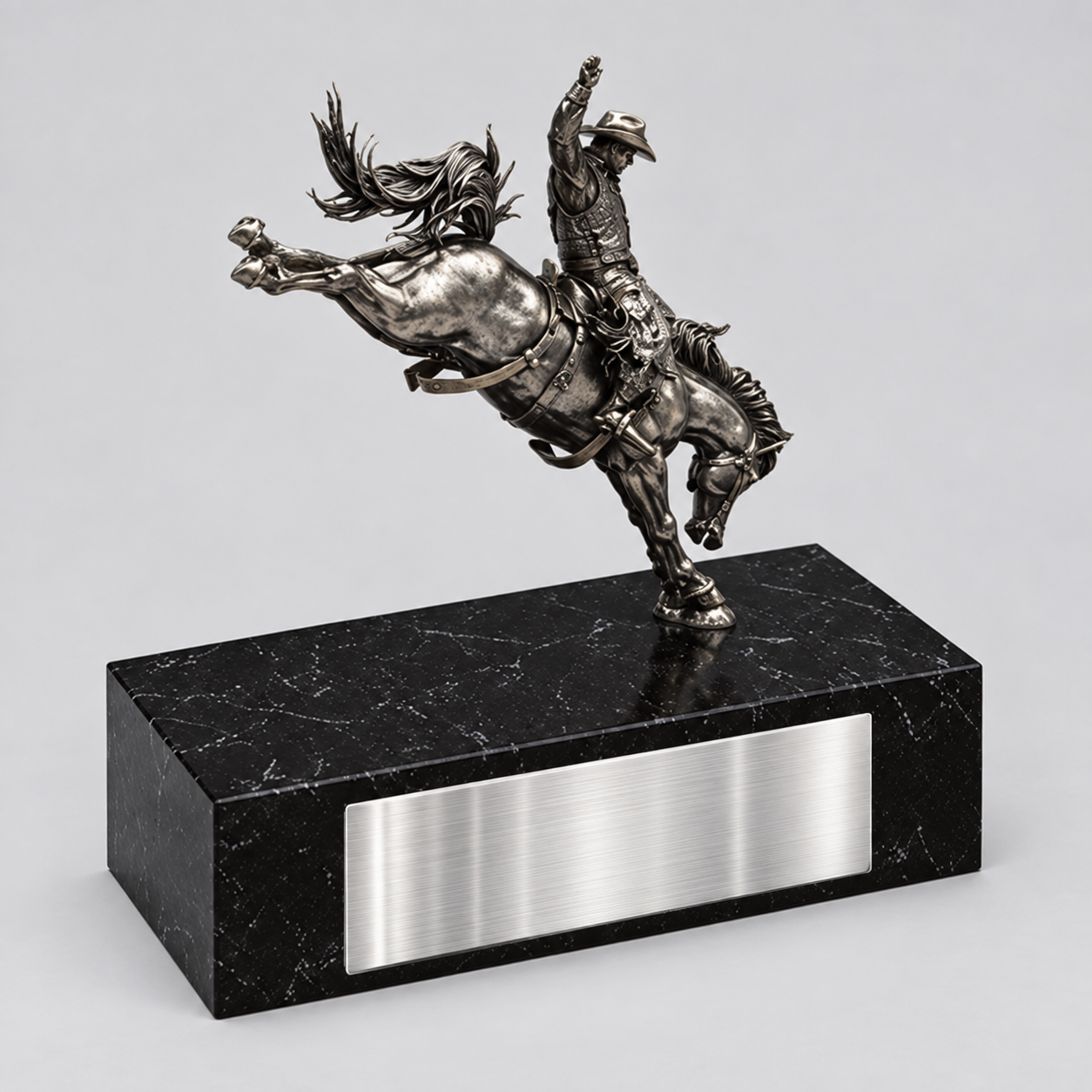
Artwork — establish the gesture
The artwork centers on the horse's raised hind legs, lowered head, and the rider's lifted arm. Those relationships create the sense of movement. The rectangular base gives the composition a clear visual foundation.
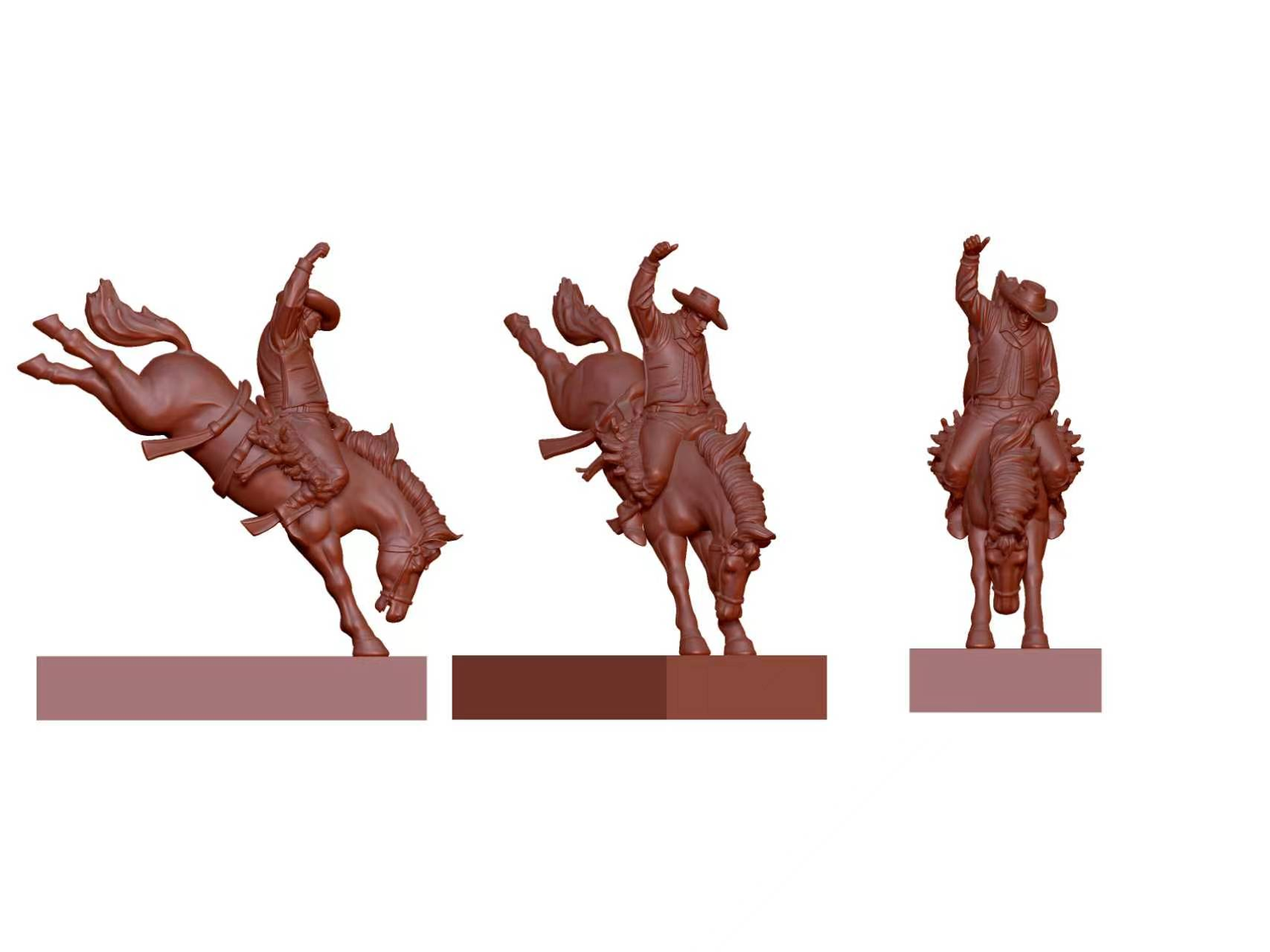
Model — check the pose from several angles
The review record for this piece includes a correction: an earlier model did not match the supplied artwork. The revised model below shows the intended bucking pose and was approved to proceed.
The side and front views reveal different things. The side emphasizes movement; the front helps show the relationship between the rider, the horse, and the support below.
Physical piece — see the forms in metal
The production photograph shows how the metallic finish catches the horse's muscles, mane, and the rider's clothing. The sculpture sits above a dark rectangular base, with a small mounting platform visible beneath it.
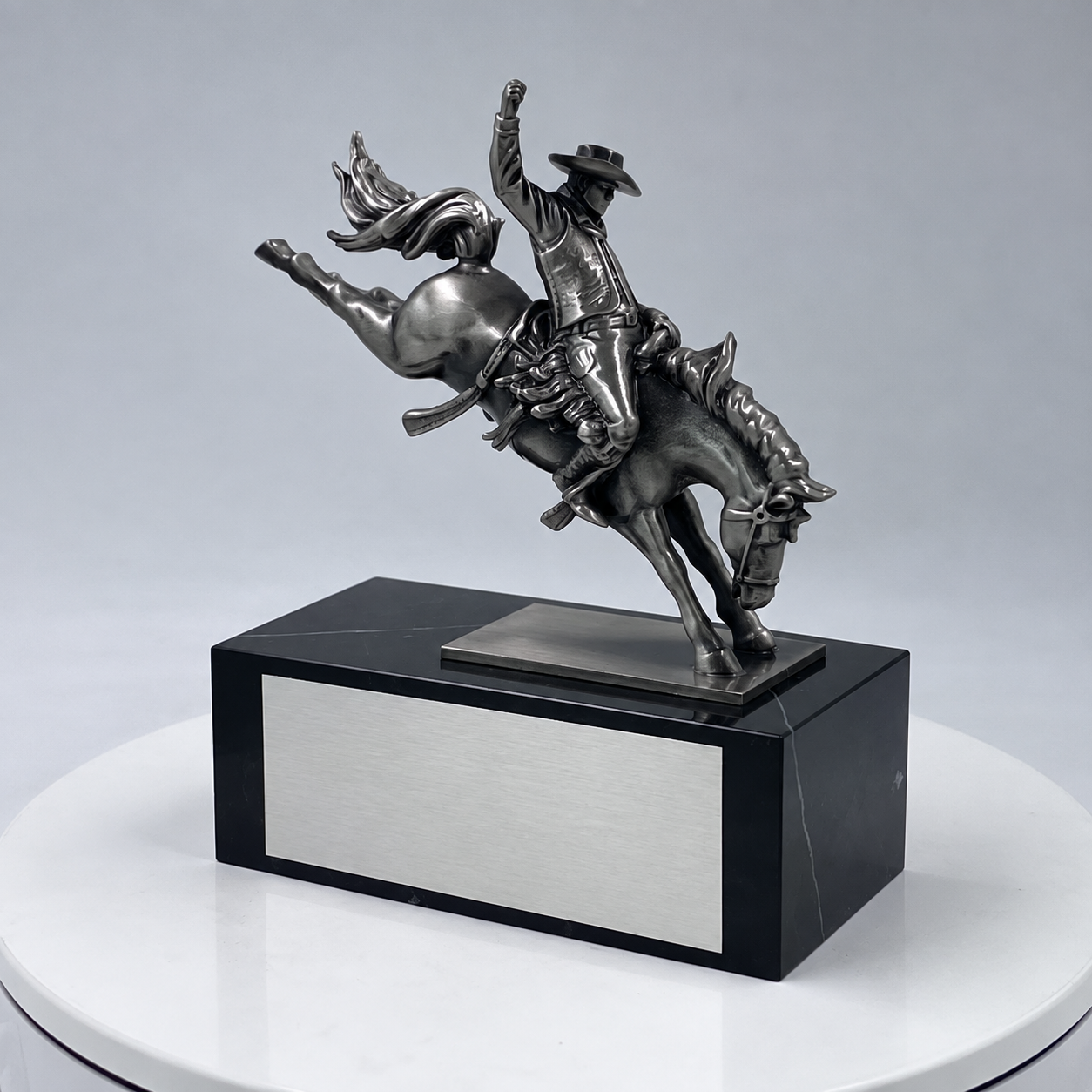
What to notice: The pose is central to the idea. Reviewing the correct model matters as much as reviewing the surface detail.
Building character: a sculpted gryphon
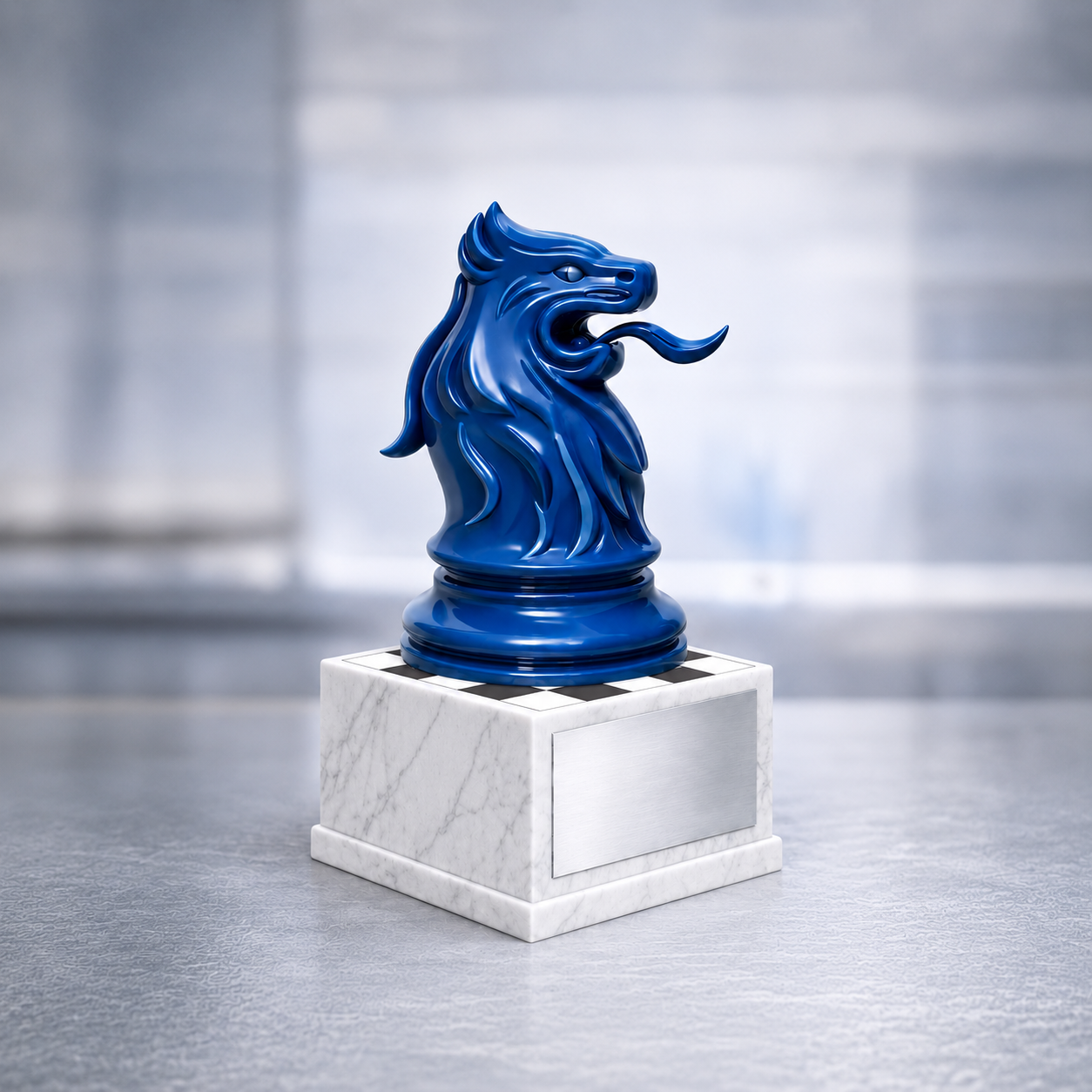
Artwork — establish the complete composition
The design pairs a blue gryphon with a white marble base and a checkerboard surface. The sweeping contours, open mouth, and projecting tongue give the figure its character.
Model — inspect the sculptural detail
The model presentation shows the figure in several views and display colors. This makes the profile, front-facing features, and flowing contours easier to compare. The model was approved before the physical sample was completed.
The different colors in a review presentation should be read in context. They are useful for viewing the forms; the selected finish is established separately.
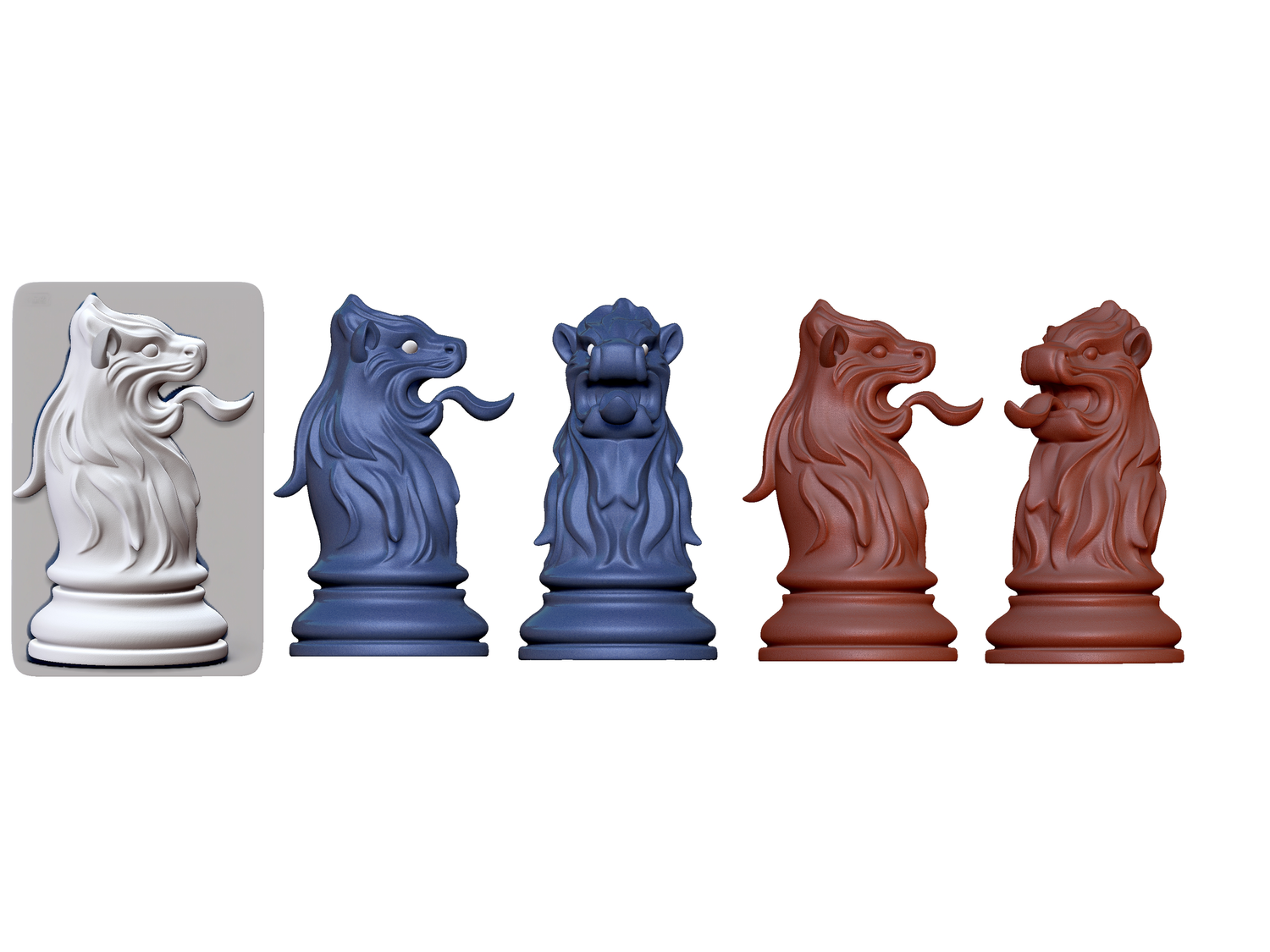
Physical piece — bring the finish and base together
The finished-order photograph shows the blue figure with its reflective surface and patterned base. It lets the viewer compare the sculpted details with the model while also seeing how the materials interact.
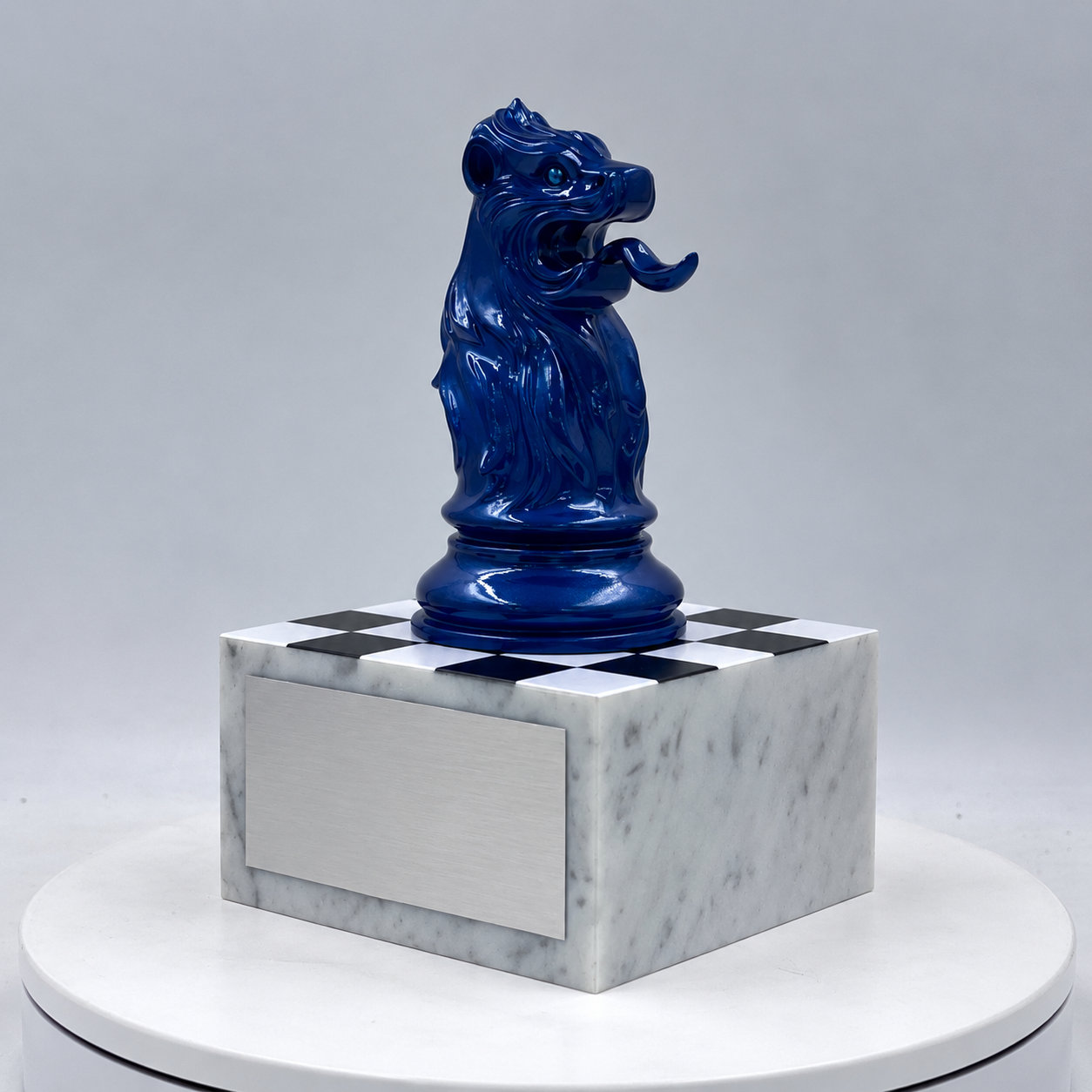
What to notice: Small changes in viewing angle reveal the contours of the face and mane. The physical piece adds the behavior of light on the finished surface.
Shaping water: a splashing wave
Artwork — combine the sculptural and clear elements
The artwork places a wave around a tall clear panel on a light-colored base. Its curling edge and foamy crest create a sense of movement, while the panel provides a calm vertical element above it.
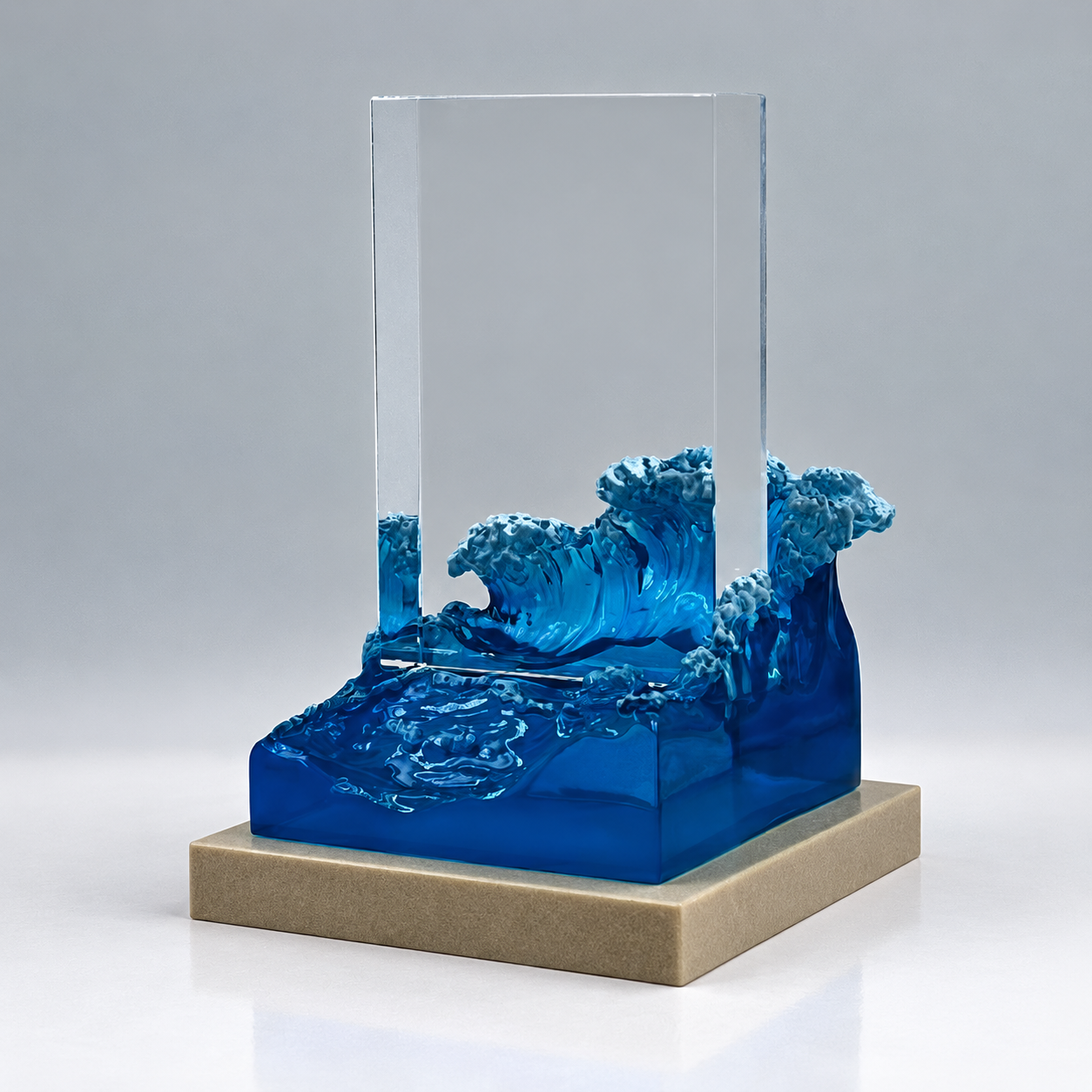
Model — separate shape from appearance
The model presentation includes both colored views and single-color views of the wave. The latter make it easier to follow the crest and the sculpted surface without interpreting the blue as a final color specification.
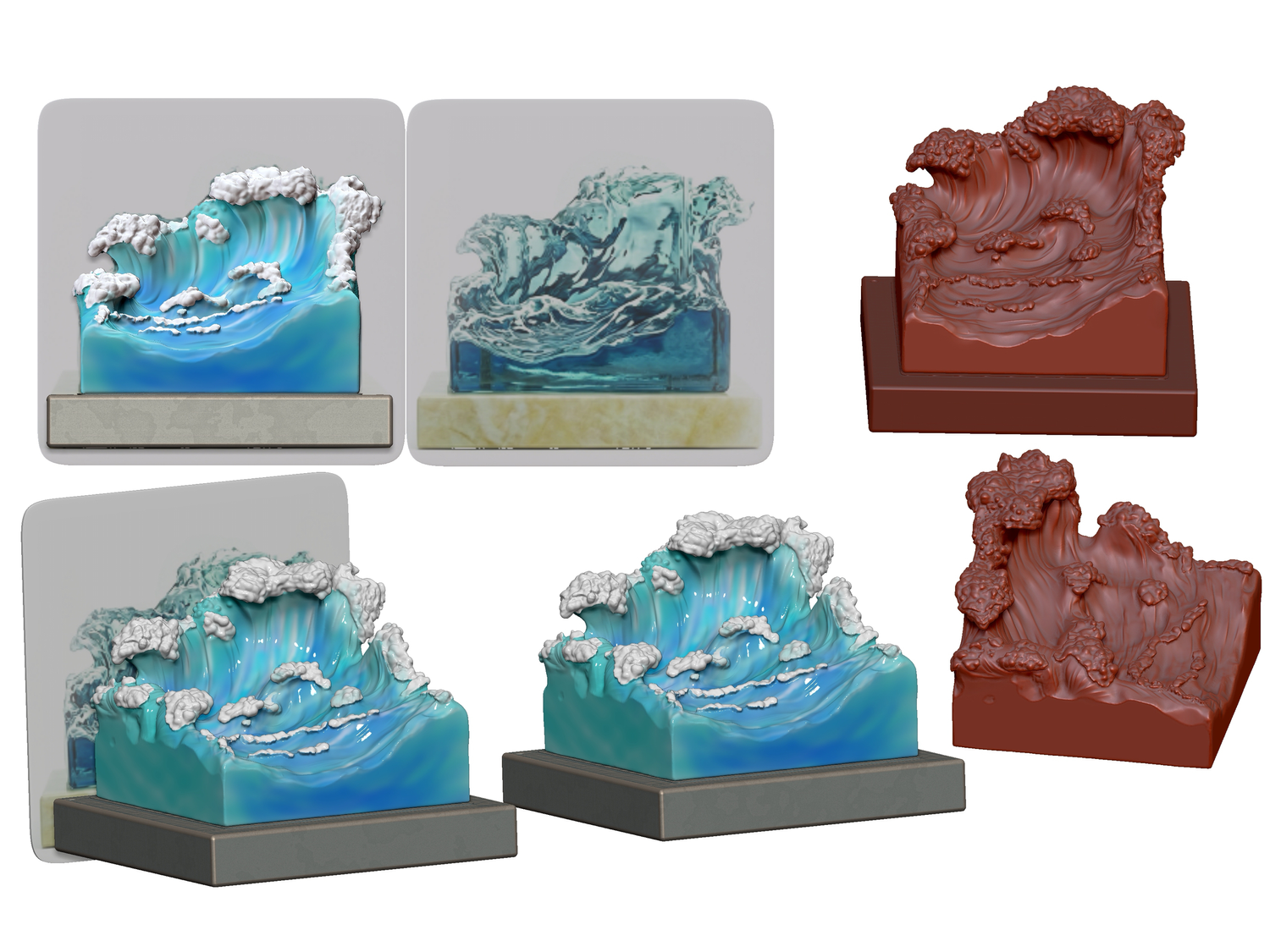
Physical piece — resolve the color in the material
The project record documents a later choice to retain the wave's shape and structure while moving to a darker blue. The revised sample was approved before the additional pieces were produced.
The finished-order photograph shows that deeper blue and the lighter foam along the crest. It is a useful reminder that approving the form and approving its appearance are separate decisions.
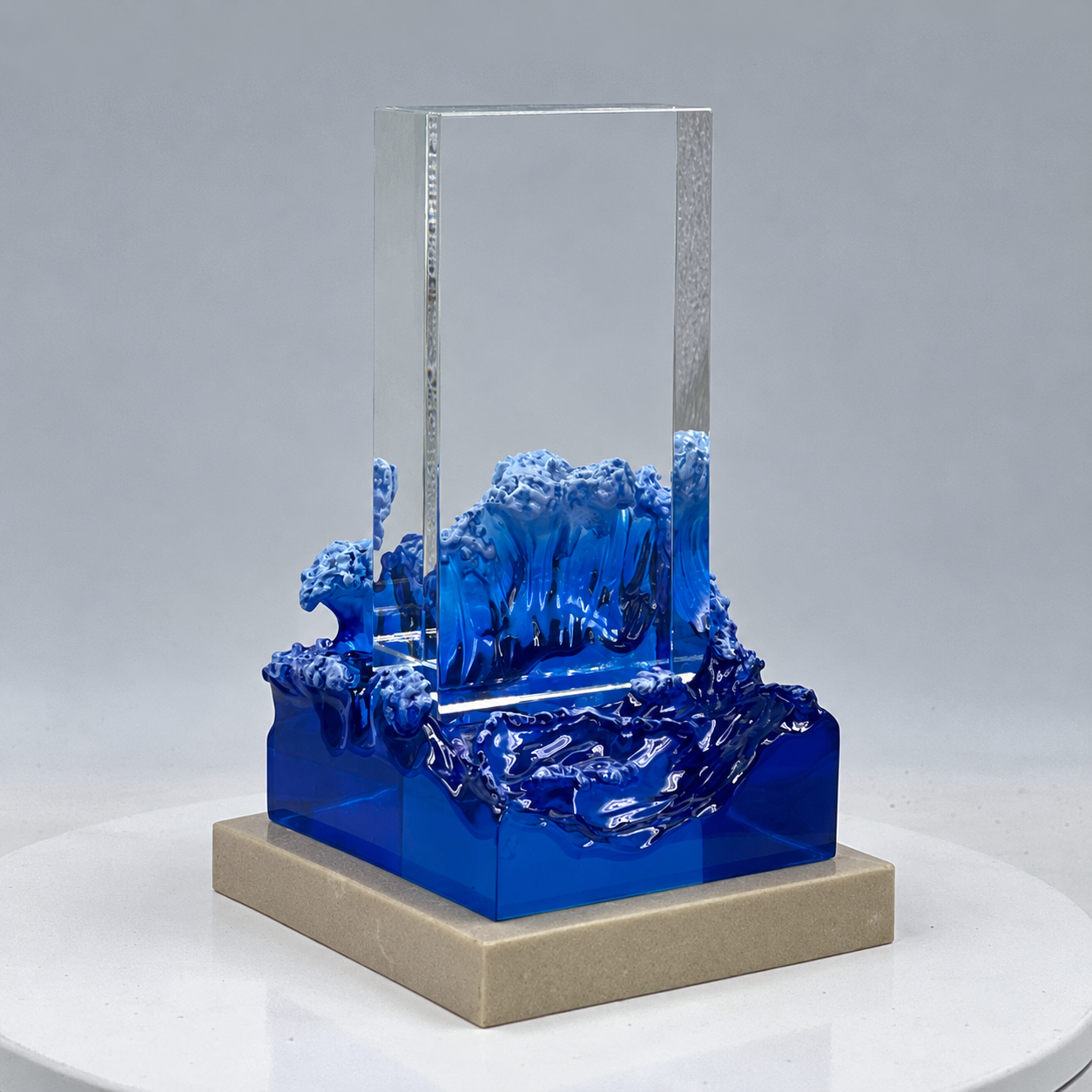
What to notice: A change in color can substantially change the impression of the piece even when the sculptural form remains the same.
Different subjects, the same useful checkpoints
The horse shows the importance of pose. The gryphon shows how sculpted details read around a form. The wave shows the difference between the geometry of a piece and its finished color.
For any custom design, the useful questions remain concrete: does the artwork express the idea, does the model carry it into three dimensions, and does the physical piece bring the materials together as intended?
Start with a subject that matters
Bring a reference, an object, or a story to Polaris Custom Awards. We can explore the forms and materials that could turn it into a custom piece.
Discuss a custom designFrom Polaris Custom Awards.