
From Historic Painting to Custom Deal Toy: Behind the Design
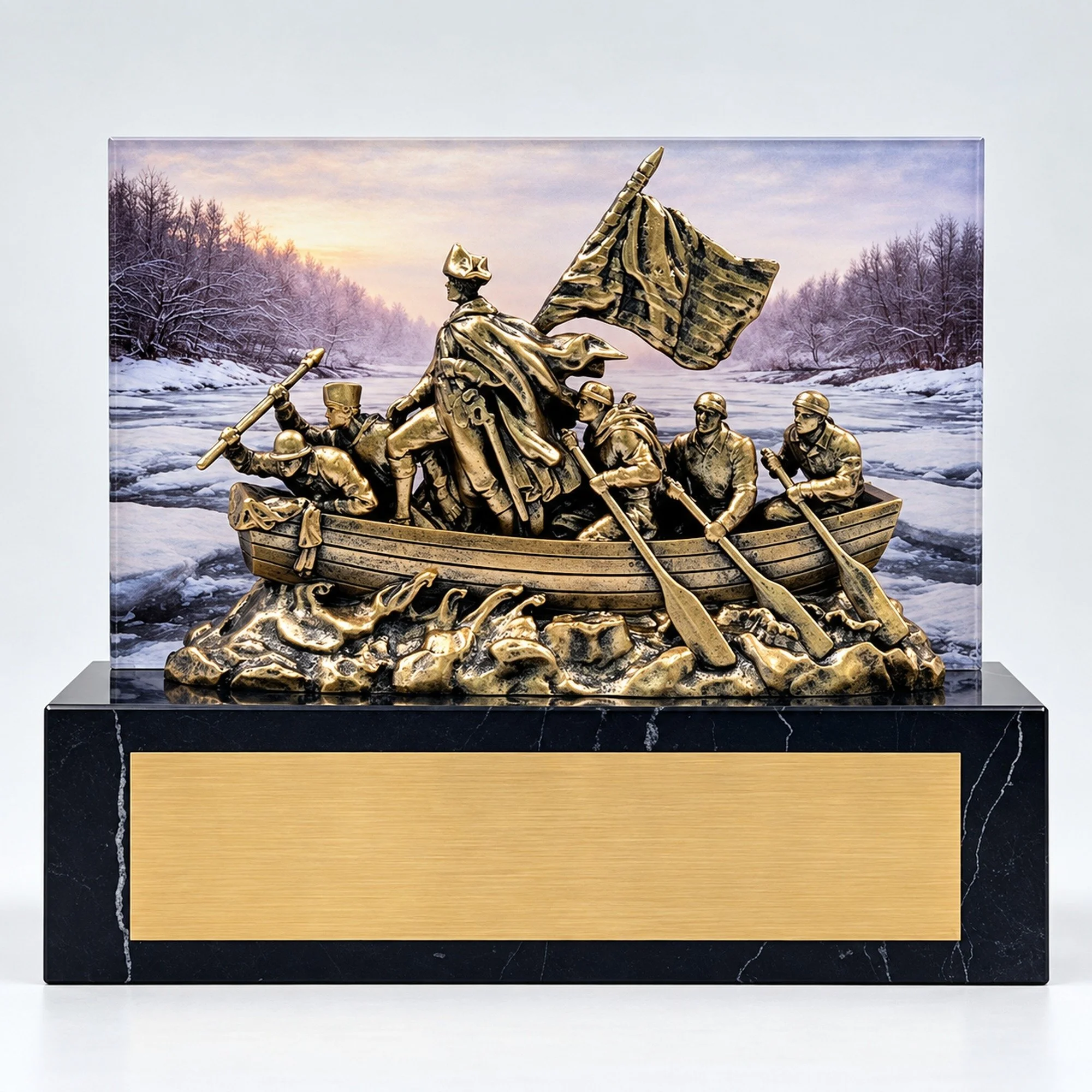
The completed composition, shown with transaction information removed.
A client came to Polaris with a broad direction: a deal toy built around American imagery and storytelling. They had several ideas, from historic ships and the Constitution to familiar scenes such as the flag raising at Iwo Jima and Washington Crossing the Delaware.
They also had a useful question for us: which of these subjects would translate best into a high-quality deal toy?
That question shaped the project. Before developing the details, we needed to recommend a subject and a physical format that worked together.
Choosing a subject with dimensional potential
We recommended two directions for further development: Iwo Jima and Washington Crossing the Delaware. Both offered a recognizable composition with the potential for a strong sculptural presentation.
Our proposals approached them differently. For Iwo Jima, we recommended metal. For Washington Crossing the Delaware, we proposed a relief sculpture.
Relief gave us a way to translate a pictorial composition into an object with depth. The figures and boat could become dimensional while remaining part of a scene designed to be read together.
The client selected the Washington direction.
Developing the approved idea
Once the concept was selected, we worked through the quotation and transaction inscription, finalized the artwork, and moved into modeling.
The design drew on Emanuel Leutze’s Washington Crossing the Delaware and a sculptural relief interpretation of that scene. It required detailed modeling before a physical sample could be produced.
See the source inspiration, artwork, digital model and finished piece together in our visual guide to the 3D modeling process.
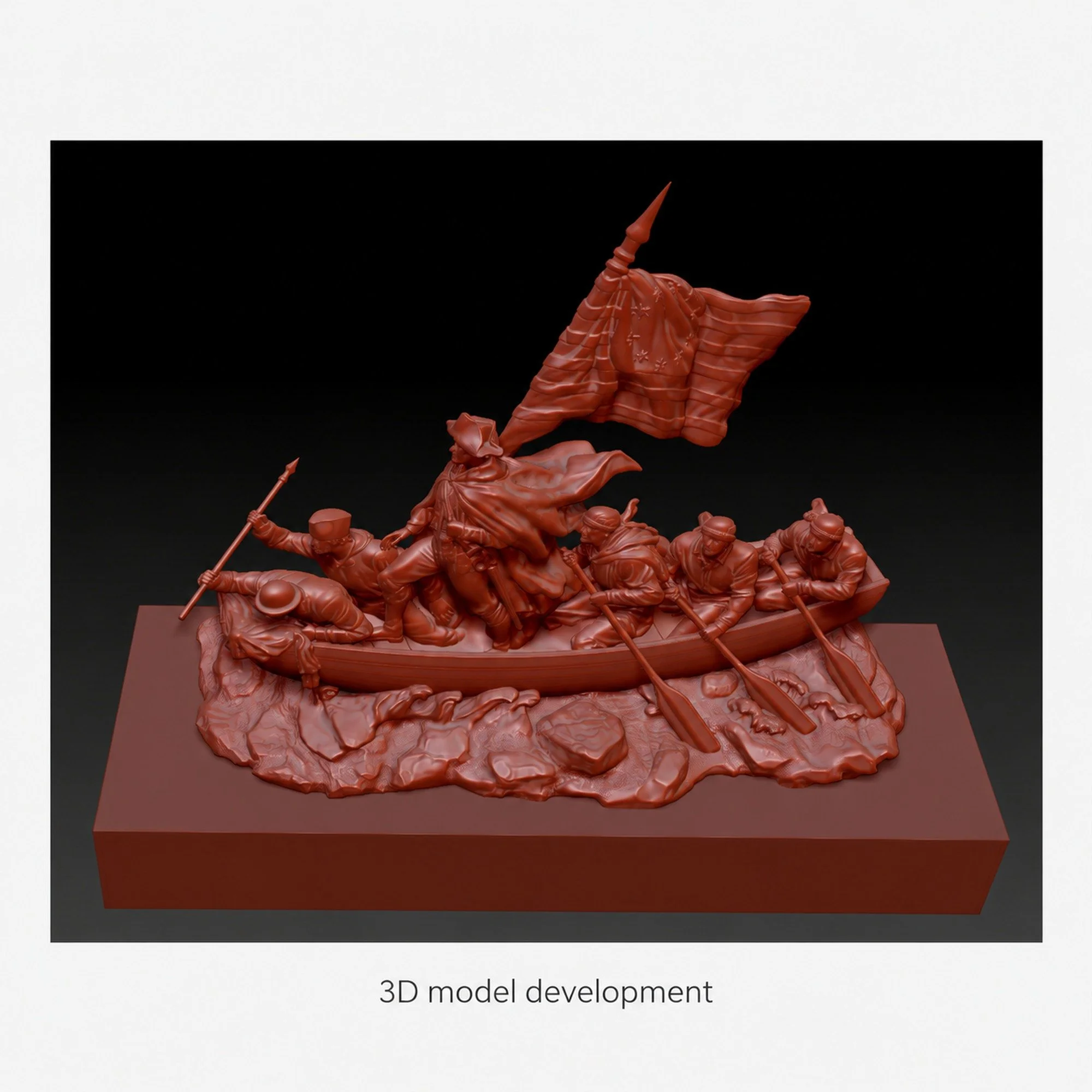
An elevated view of the digital model shows the boat, figures and oars before finishing and assembly.
That sample was an agreed stage of the project. The client would receive and review the prototype before we produced the remaining pieces.
For a sculptural design, this is a valuable change of perspective. Artwork establishes the intended composition. A physical sample lets the client examine how the figures, surface details and overall presentation work as an object.
Looking closely at the prototype
The client responded positively to the prototype’s quality and overall appearance. They also had questions about particular details.
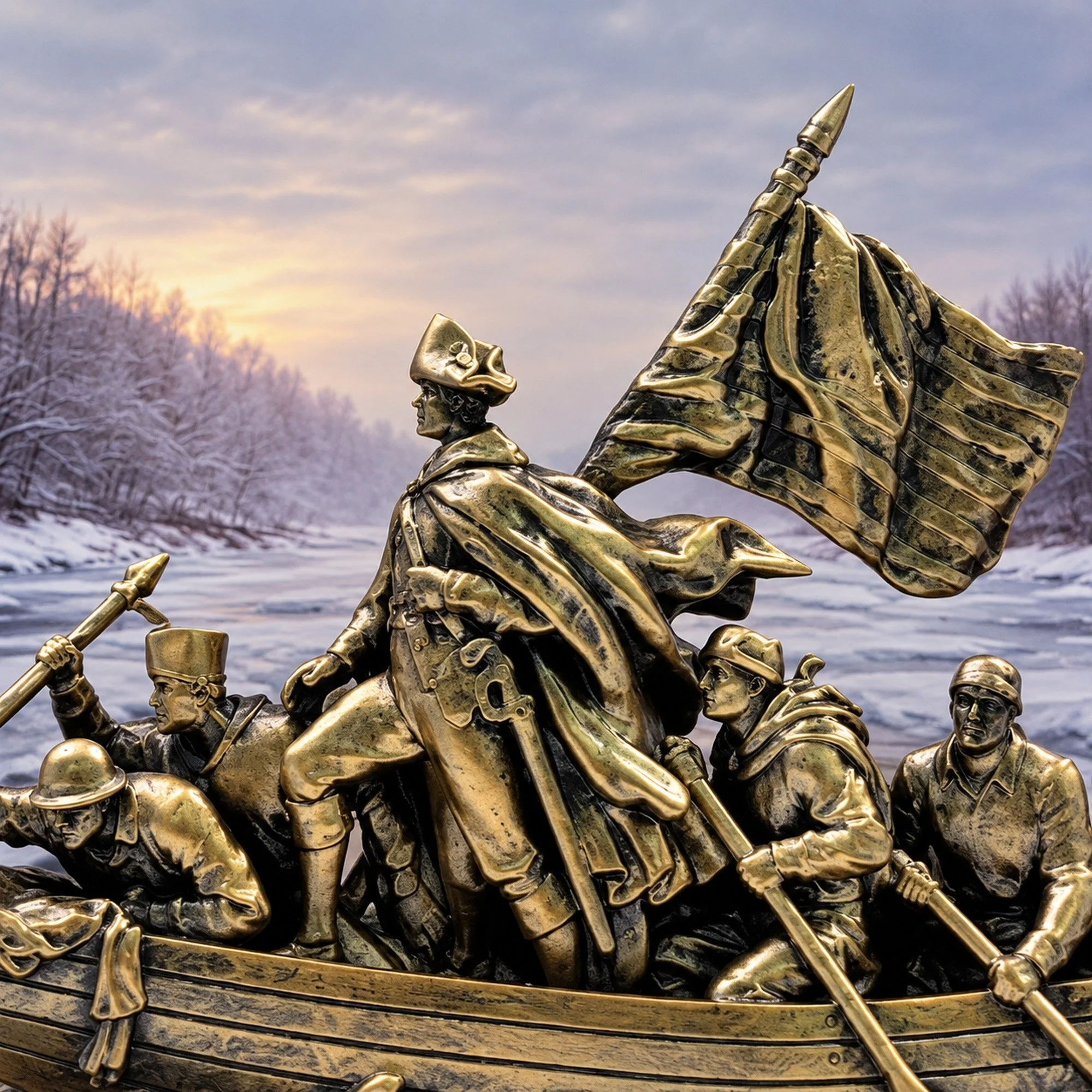
A closer view of Washington and the flag reveals the sculptural treatment of the central figures.
Could some of the figures’ headwear be changed? And should an object held near the bow be reoriented or removed?
We returned to the original painting and the relief that had inspired the design to explain those details. The headwear represented caps and head scarves, and the object near the bow represented a setting pole. Those elements connected the piece to its source material.
With that context, the client chose to retain the details and approved the design as it stood. Keeping them preserved a closer connection to both the painting and the relief that had inspired the piece.
What the review accomplished
A prototype review can lead to revisions. It can also give everyone enough information to approve the existing design with confidence.
Here, the discussion connected small details in the physical sample to the artwork behind them. Understanding those references helped the client see why retaining the details mattered to the design.
That conversation was part of completing the design.
From a broad brief to a finished piece
The project began with several possible subjects and an open question about materials and dimensionality. It progressed through a focused recommendation, an approved concept, detailed modeling and a physical review.
The finished piece brings that process into view. A full photograph shows the composition; a closer view reveals the sculptural details that became part of the approval conversation.
This is the kind of collaboration we value at Polaris: helping a client develop an idea, explaining the choices involved, and carrying the design through to production.
For other approaches to pose, detail and materials, explore our horse, gryphon and wave modeling examples.
Have a theme or reference image in mind? Tell us about your project, and we can help explore how it could become a custom deal toy.
From Polaris Custom Awards.