
What a Finished Deal Toy Doesn't Show
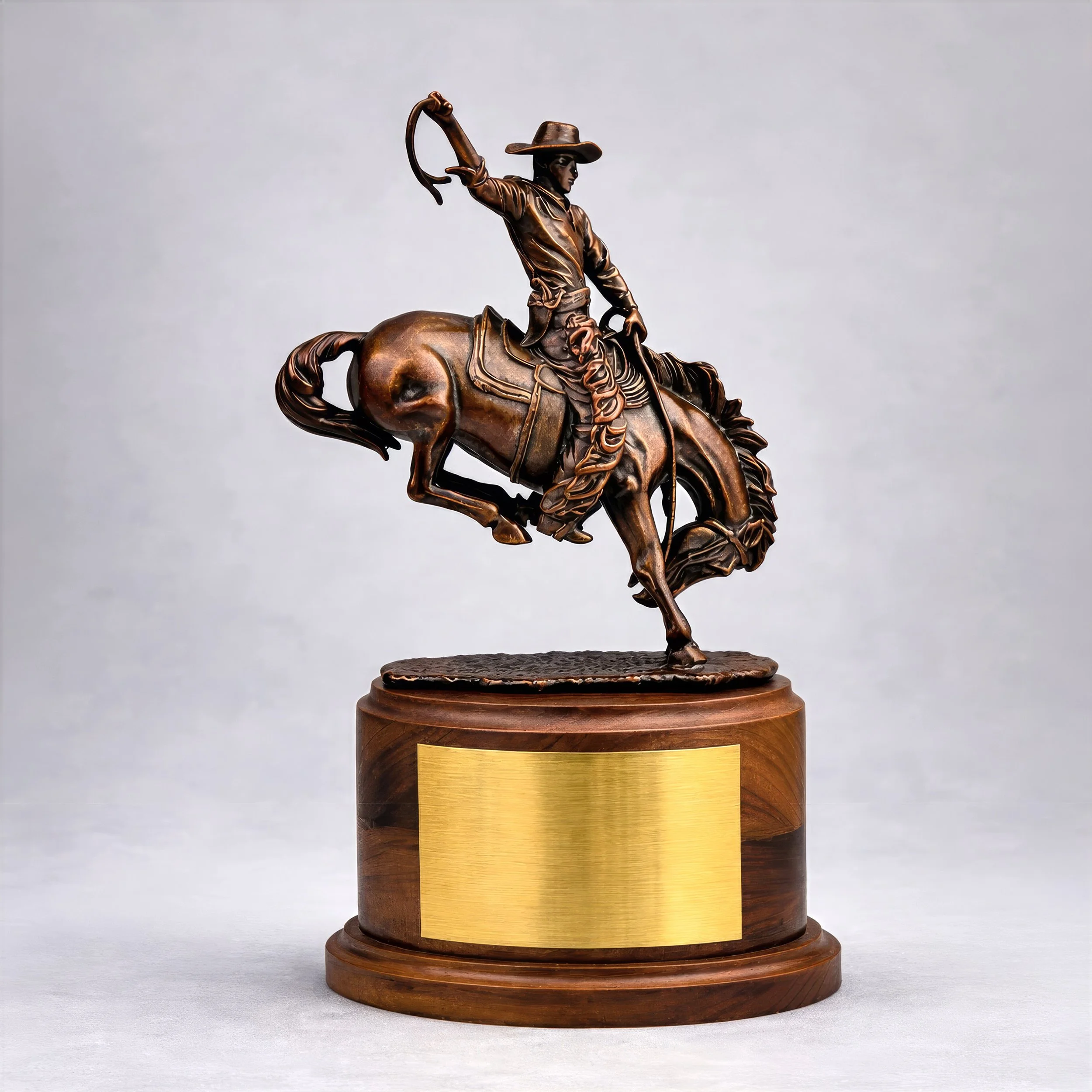
Looking at a finished deal toy, you see the object that made it through the process. You do not see all the adjustments and iterations it took to get there.
The conversations, 3D modeling, proportion studies, renderings and prototype reviews are easy to overlook because, when a custom piece is successful, the result feels resolved.
This bronze-toned rider is a good example: a fully dimensional sculpture mounted on a walnut base with a brass plate. Getting there required several kinds of design thinking, each solving a different part of the problem.
The Form Had to Work in Three Dimensions
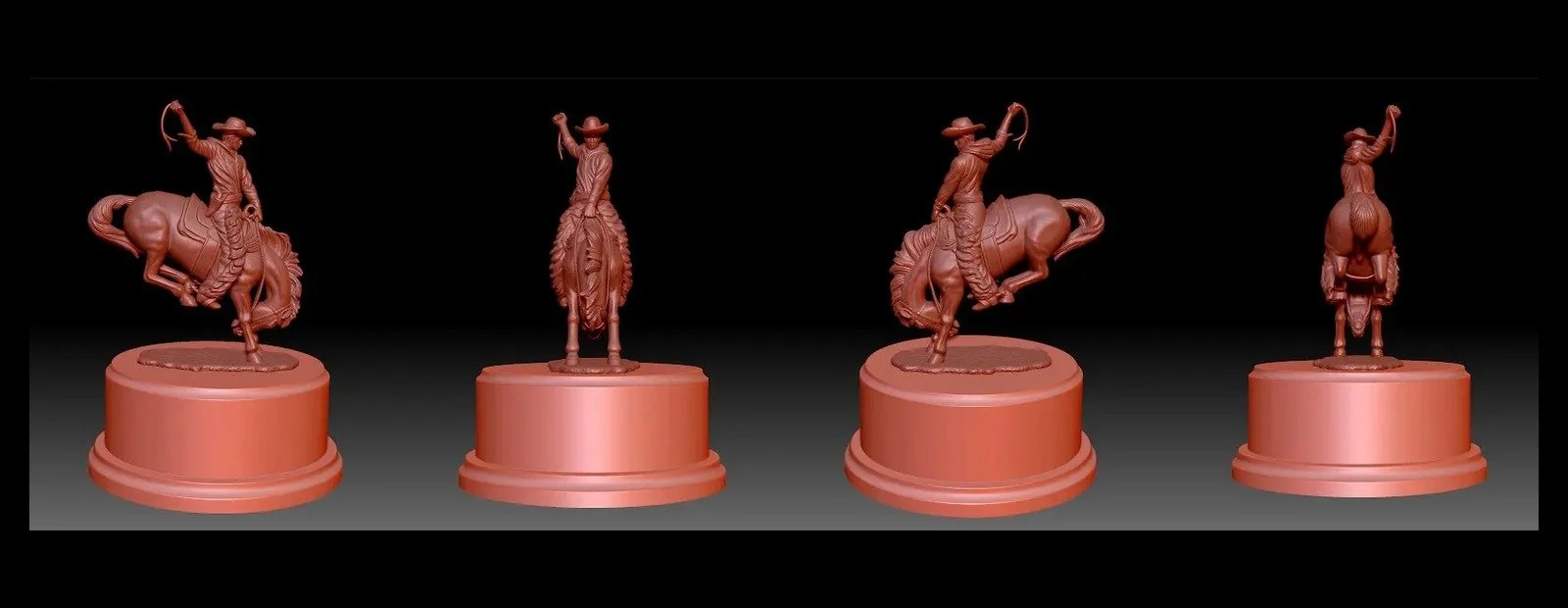
A sculptural deal toy can’t be designed only from the front.
Before anything could be cast, the rider and horse had to be developed as a true 3D model and studied from multiple angles. The pose had to read correctly from the front, back and sides. Details needed to give the sculpture character without becoming so delicate that they created unnecessary manufacturing problems.
An image can work from a single viewpoint. An object has to work all the way around.
For more on how an idea moves into production, see Inside the Deal Toy Design Process.
Proportion Is Part of the Design
Once the sculpture was working, the base still needed attention.
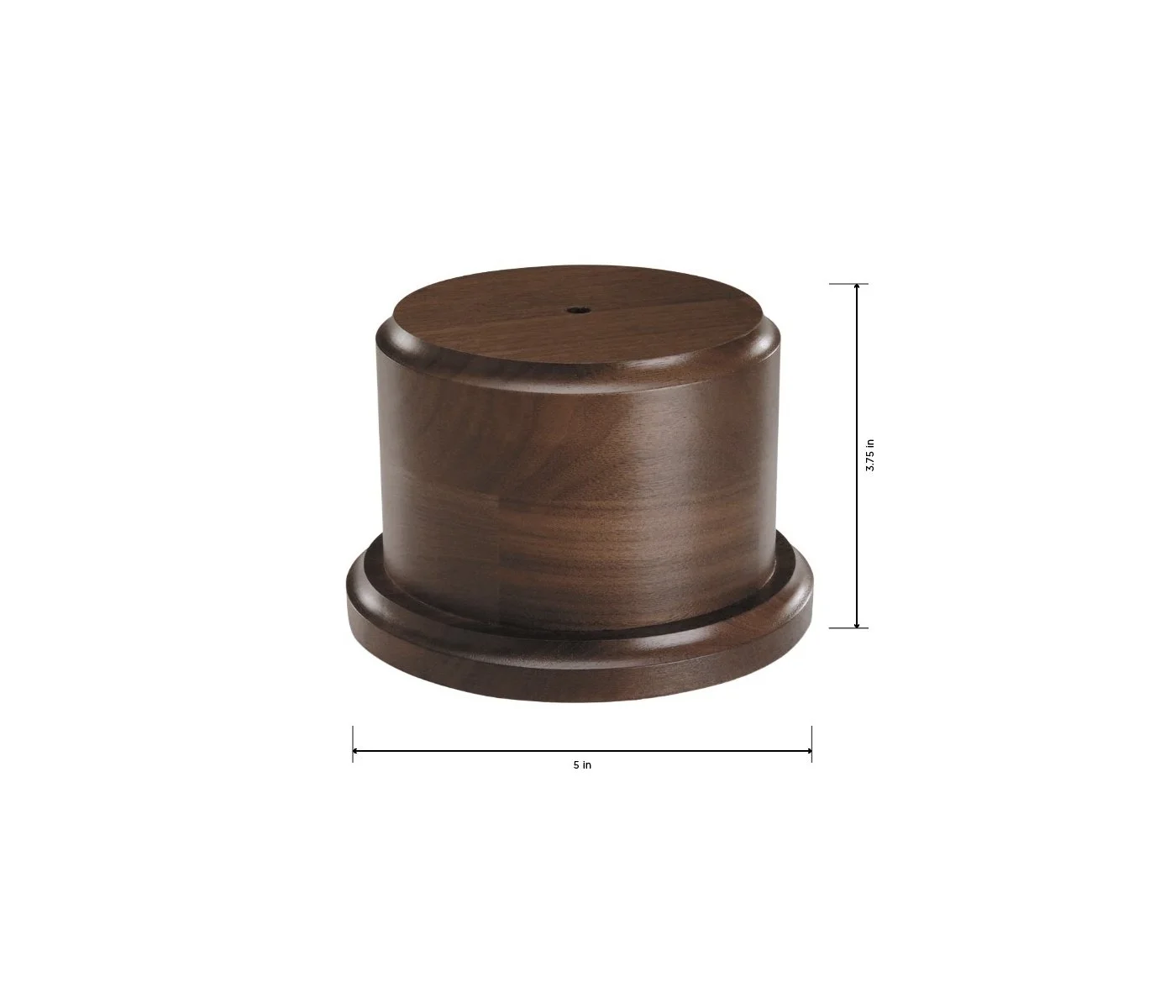
An early version used a wider, lower base. We moved to a narrower, taller proportion. The adjustment changed the relationship between the sculpture and everything beneath it.
A base has several jobs at once. It must support the object, provide room for the transaction information, complement the sculpture and give the finished piece the right sense of weight and presence.
Dimensions alone can’t tell you whether a design is right. A piece can be technically correct and still feel too heavy, too slight, too wide or too compressed.
The Rendering Helped Align the Direction
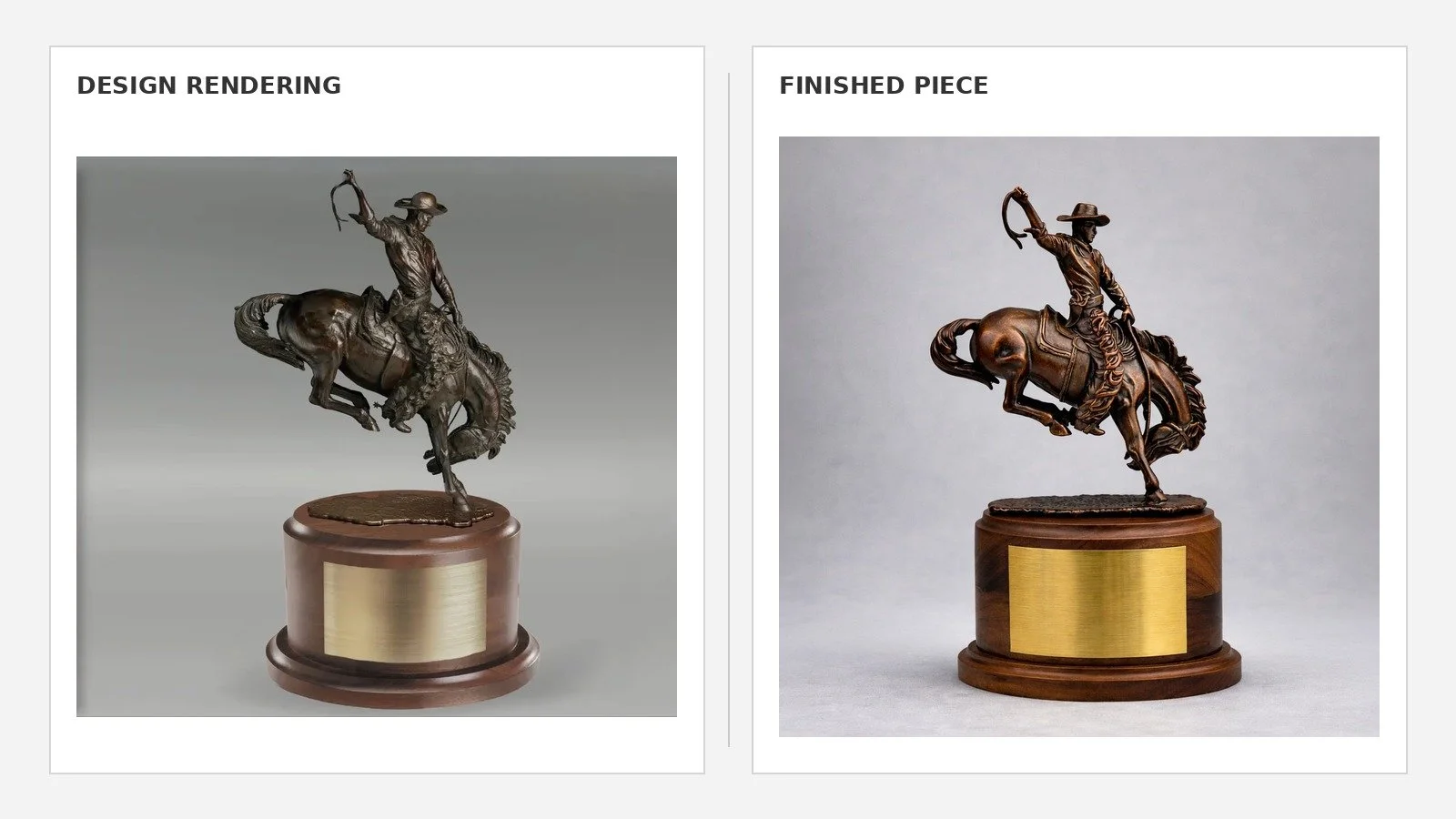
Renderings let everyone evaluate the same idea before production begins. Is the scale right? Does the finish make sense? Does the base feel proportionate?
A rendering establishes the intended form, finish and presentation. Moldmaking, casting, finishing, assembly and detail work turn that direction into a physical piece, with further refinement along the way.
We use renderings to make better decisions before manufacturing. They work alongside the judgment needed to produce the actual object.
Material choices affect how details reproduce and how the finished piece feels. We explore those decisions in Why Materials Matter in Deal Toy Design.
The Prototype Changes the Conversation
A physical prototype answers questions that a screen cannot.
Once a piece is in your hands, you can evaluate its scale, weight, finish, balance and details directly. On this project, reviewing the prototype led to another refinement of the brass plate before production was completed.
Polaris makes a physical prototype for every factory production project, whether or not the client needs to review it directly. It gives us a chance to catch details that are easier to judge in the actual object than in a drawing or rendering.
Sometimes the prototype confirms that the design is ready. Sometimes it shows what needs to change. Both outcomes are useful.
Small-Batch Manufacturing Is Part of the Design
Custom deal toys occupy an unusual space between sculpture and manufactured products. Quantities are relatively small, but each copy still needs to look and feel consistent.
That means designing for repeatability from the beginning. A detail that looks compelling in a rendering must also reproduce cleanly. Materials must suit the form, and added complexity should earn its place in the finished piece.
This is where experience matters: deciding what the piece needs, what it can do without, and how to translate the idea into an object that can be made well.
That thinking also shapes our approach in Addition by Subtraction and The Judgment Behind Great Design.
The Finished Piece Is the Evidence
By the time you see the final object, most of the decisions that shaped it are no longer obvious.
You see the sculpture, the walnut base, the finish and the plate. Behind them are the rejected proportions, modeling decisions, prototype review and manufacturing adjustments that made the piece work.
That is what we want to show more often at Polaris: finished deal toys alongside the thinking and work that went into making them.
The finished design may look inevitable.
It wasn't.